Kali heated the large bag of watery substance on the special radiator contraption. Her cupboard was full of those bloody bags. She’d had to have the shelves put in especially.
Last one of the day. This was the fourth time she’d done it. A soft plastic tube protruded from her stomach through a small hole there. She washed her hands, wiped the area clean with disinfectant, sprayed the tubes and disinfected the table. Everything was ready.
First the fluid inside her came out into the empty bag from earlier. Kali felt the relief from having those 2 extra litres slowly leave her body. It used to make her feel a bit queasy. Now a year down the line, she was used to it.
But her body was tired and weary. She felt sick and exhausted. Most of all she felt very down. Twenty one years old and she was tied to the house because of this thing – this one thing that was wrong with her. It was so unfair!
It was summer again. Nine o’clock, but still light and warm outside. She sat by the open window wishing her life away. She wanted to enjoy it. Wanted to reach out and touch normal reality, but instead she was here. Here in this grey world of restricted living.
There was no point in going out much. She didn’t have the energy and she’d only have to come back a few hours later for this stupid rigmarole. The first couple of months didn’t seem so bad, but after a year of it, missing all her favourite foods and only being allowed to drink 4 cups of fluid a day, she was heartily depressed. No more chocolate, bananas or salt. Everything tasted bland now. Potatoes had to be boiled to mush.
OH! She felt the tube hit off the nerves inside the bottom of her abdomen. It was like a painful jolt of electricity that shunted her out of the daydream. That was something one never quite got used to! She quickly clamped the tube to stop it trying to drain any more and the pain ceased a little bit. Kali kicked the piss-coloured bag out the way, got the new, heated, clean fluid and hooked herself up to it. She felt it draining in, filling her abdomen again, slowly. It felt as though it was pushing on her lungs, but there was still a half bag to go. She tried taking a deep breath, but there wasn’t much room to do even that.
Well, it was Friday night! If she had to eat shitty white flour she was phoning for a pizza! She dialled the number, “Hello, 1 veggie supreme please. Kali Hunter. Yes, that’s right Regent Street. Flat 1/1. Number 36. Half an hour is fine. Thanks.” That would give her time to finish up with all this, have a quick shower and get into her jammies. Another video and pizza night. The joys!
The pizza place was just round the corner. “One veggie supreme for Hunter.”
“Hunter, aye? The sick girl?” asked the delivery man.
The chef nodded.
They didn’t need to say any more. Every Friday night. They’d already had the conversation about what a shame it was several times. It was just business as usual.
The cook smiled, “And how is that wife of yours, John?”
“Aye, she’s fine. I’ll be a dad any day now.”
“All those sleepless nights!”
“Acht it’ll be worth it.” John smiled proudly. “Is that it?”
The cook handed over the boxed pizza.
“Cheers! See you later!”
The cook and delivery man nodded to one another.
Outside it was the usual busy Friday night. John whistled as he walked along the road.
“Excuse me, son…” a fragile voice interrupted his thoughts, “You couldn’t tell me the way to the underground, could you?”
John smiled warmly, “You’re wanting to just keep going straight along that road there.” They were standing at a fork in the road. “You’d be better crossing here and walking along that side of the street.”
“Oh, right. Thank you, son.” The old woman smiled gratefully and tottered off.
“No bother,” John smiled, turning and crossing the road. Forgetting to look, he didn’t see the car that was coming round the corner. The driver was too busy irately shouting at someone on his mobile phone. In an instant the two collided and the world changed.
She knew all her mates were up at the dancing and she, quite frankly, resented it. Her illness was turning her from the sweet, carefree girl she’d been just a few years before, into this bitter, resentful, depressed young woman tied to her house and her tubes.
The bag had drained in now. Kali pulled herself up, her bloated stomach in front making her look like she was almost ready to give birth. Breathlessly, she waddled through to the shower room, got herself ready for the night and then settled down to wait for her pizza. She wasn’t sure if she’d manage to find a space for it in her stomach, but she would certainly try!
Half an hour went by.
God. She seemed to spend her life waiting for things.
Forty five minutes went by.
An hour.
She tried phoning the takeaway several times. It just rang out.
Two hours later the film was finished. She’d have to make some tea and toast. She felt sick with hunger now. The pizza place would be getting a complaint when she finally managed to get through to them!
Always waiting. Well, she was fed up waiting!
The phone rang. At last. Maybe they had lost her order or the ovens had broken down. They better make it free. “Hello, yes?”
“Can I speak to Kali Hunter, please?” an efficient voice said.
“Speaking.”
“Miss Hunter, I’m delighted to tell you that your wait is over. We have a kidney for you!”
“What? Oh my God!” she screamed down the phone, eyes bulging out their sockets, filling with tears. “Oh my God. Oh my God. Oh my God!”
The lady on the other end laughed, “I’m not surprised you’re happy. Congratulations.”
“What do I do now?”
“Get yourself here as quickly as possible. Do you need transport?”
“Yes please.”
“Oh, and please don’t eat anything. When was the last time you ate?” the lady said in a concerned tone.
“I haven’t had anything since lunchtime.”
“Oh fantastic! See you soon, then.”
“Yes.”
Kali hung up and danced around her living room. She’d never been so happy, nor so grateful, for not having her pizza delivered! In fact, she’d never had to look at pizza again! Tomorrow she could eat what she liked.
At the hospital she washed again and gowned up.
The nurses were all smiling and flitting to and fro.
“This is just your pre-med to relax you.”
She took it with thanks. She was excited and nervous. Something to calm her down would be good. “Do you know anything about the donor?”
The nurse sat down beside her, “Sometimes it’s best not to know,” she said wrinkling her nose, head to one side.
“I want to know,” Kali sat up.
“Well, he was a 32 year old man who was involved in a car accident.”
Kali’s face was sombre as she nodded. The nurse left the room.
Just at that Kali heard a ring tone. She’d forgotten to switch off her mobile phone! “Hello,” she answered in a half whisper, in case she got into trouble.
It was the takeaway.
The man sounded very upset.
“I’m so sorry for the delay with your pizza, Ms Hunter, but there was a terrible accident.”
“Oh dear! Well don’t worry. It actually turned out for the best. What happened?”
“John, the delivery driver was knocked down and killed on his way to your house.”
“Oh my God!” Kali gasped. “That’s so tragic. I’m so very sorry. Oh he was very young.” Kali had met him on many Friday night doorstep visits.
“Only 32.”
Kali froze.
The anaesthetist appeared at the door.
“I have to go.”
She hung up.
“Well, Ms Hunter,” the kindly doctor beamed, needle in hand. “This, I believe, is what you’ve been waiting for! One new kidney coming up.”
Transplantation is a lot to cope with, not just for donor families. I’m currently on the transplant list for the second time. My mum gave me a kidney 18 years ago. It is now past its sell-by date and I’m needing another. A very kind friend has stepped in and been tested. We’re hoping it happens this year, but for now…I, too, am waiting…
Please carry a donor card and join the organ donor register.
Here is the introduction to the book I am currently working on!
The Mysteries of Venus
or Venus, My Love, I Hate You…With a Passion.
Introduction
Venus. The Morning Star. The Evening Star. Light. Dark. No other symbol has been so loved or so hated, in equal amount. Depending on the name we decide, Venus is either the epitome of Love or the epitome of Hate. Or just a bright, shining planet in the sky, appearing at dawn or dusk. It is often symbolic of all that is feminine: Woman – another object loved and hated in equal measure by society.
My intention in writing this book is to show how society has both revered and demonised anything associated with this one celestial entity. From goddess to fallen angel and demon, Venus has enraptured and repelled humanity.
I will take a chronological approach, showing how Venus was originally worshipped by many ancient religions, in both feminine and masculine aspects. As this kind of equality waned, with the advent of new patriarchal religions, both the goddess – and women, generally – became “fallen” in the eyes of their oppressors. Is it coincidence that Eve was the name of this fallen woman? Is Eve symbolic of the Evening Star? The name seemingly comes from the root word “to live”, but is also very like the Aramaic word for “serpent”; also a symbol, perhaps, of death. Life and death. One symbol. Two opposing meanings.
From here, I will look at the demonisation of all that was once good, and the names we have been mercilessly taught to hate throughout the centuries. This kind of hateful rhetoric has permeated our society, and may be partially responsible – if not wholly – for the irreverence and disrespect shown towards women of the past and present. Women, in particular, who were (and are still) executed as witches – clearly society’s scapegoat for those uncomfortable with female sexuality. We associate witch hunts with the Middle Ages and Catholicism, but witch hunting has been around since antiquity, and it continues to this day in places like Africa. Many societies are extremely uncomfortable with, and fearful of, feminine sexuality. From witch hunts to female genital mutilation, women’s sexuality has always been controlled in some form or another, sometimes subtly, sometimes violently.
Lilith, first wife of Adam. She was the first woman in Eden, but later demonised for refusing to lie beneath him and wanting equality. Her name means ‘night’.
As a singular entity, society can be viewed as having an almost multiple personality in its approach to how it feels about the Feminine. On one hand, the Feminine is respected, on the other it is controlled, humiliated, beaten and raped of any individuality or strength. It is a constant power struggle between loving someone wholeheartedly, and violently oppressing them, which must surely come from a lack of identity, feelings of insecurity, fear and ignorance on the oppressor’s part.
As we are brought into the dawn of the 21st Century, we are once again seeing the light of the Goddess. New religions are springing forth which revere the feminine aspect of deity. With it, there is a change in how women themselves are perceived. In many parts of the world, they – like the Goddess – are becoming stronger and more respected. Balance is being restored to our consciousness, and this can only be a good thing. Venus, the Goddess of love, beauty and harmony is bringing all these things with Her, which must surely herald a time of peace on earth. One would hope that it does not mean an end to the Masculine Divine, as balance is key to harmony. Which is the primary reason that, even as a pagan, I am not averse to the principles of Christ.
Many are choosing science over religion, as patriarchal faiths alone do not fulfil the human need for balance. Many atheists (in particular) are becoming focused on the negative aspects of religion, which deliberately oppresses and controls. Of course, the men at the top of these hierarchies are responsible for this oppression and control. This makes little sense to us, as the purpose of spirituality is to comfort us and free the psyche, connecting us with the life force or Divine. I suppose, to believe in something bigger than ourselves, gives us hope that our lives on earth are worthwhile and have meaning. Which, of course, they do in any case. With or without religion. However, it also helps us to live in harmony with one another.
Since we have been out of balance and ruled by oppressive forces, with the Divine Feminine hidden, we have lived in a power-hungry state. Parts of the world are in turmoil at the moment, but nevertheless, we are seeing positive changes. Even within Catholicism, a movement towards a more integrated belief system can be seen under the guidance of Pope Francis. It is not entirely balanced, but it is definitely a step in the right direction. Perhaps a further restoration of the Divine Feminine within the Church might be to bring Mary Magdalene out of the darkness too. Perhaps now is the time for her to stop feeling guilty about being a beautiful and sexy woman. Whilst the Virgin Mary and Mother Mary are evident and familiar, these show that women only have two roles in society: to be virginal or to be a mother. Women do not necessarily fit neatly into either category. In fact, in many pre-Christian and modern non-Christian faiths, the Goddess is symbolised by the three ages of Woman: maiden, mother and crone. Three different women called Mary were at the foot of the cross. Mary, her sister Mary and Mary Magdalene. Mary. A name which may mean death/bitter or love. Another opposite. Which, in Aramaic is also translatable as “lady”.
Mary Magdalene
I will unravel the intricate mysteries of Venus in this book, showing the many various faces of the Goddess and the symbolism of this hot, celestial beauty. Furthermore, I will also aim to show the effects of society’s changing beliefs on, not only the Divine Feminine but also the women of the world throughout the ages and throughout a woman’s life-cycle. From reverence and awe, to complete and utter rejection. They say there is hidden treasure in The Vatican. There is. It is The Goddess. It is Woman. It is Mary Magdalene. It is Venus.
Alyson Dunlop
Glasgow (27th September 2013)
Until next month, the key to life is balance! Your friend, A.D.
In my previous articles, I mention the phenomenon of alien abduction, which I believe may be related to sleep paralysis or seeing into another dimension. I don’t rule out that these two things are related.
This week I would like to concentrate on a type of alien that over 50% of reported abductees or contactees claim to have seen. These aliens are known by the title of “The Greys”, so-called due to their skin colour. There are many theories about who they are, where they come from and what they want! As well as having a grey skin tone, they are also perceived as having large heads and big, black eyes.
I am interested in the human experience. Of course, I would also like to know what on earth contactees are experiencing. It didn’t take much reading to realise that the entire alien subject has evolved a mythology of its own, based very much upon what people think rather than what they know.
Having said that, mythology is always a subject I have been fascinated by and thoroughly enjoy reading. All mythology is based on acquired knowledge of some kind. It seems that aliens are the scientific age’s version of the modern faerytale, with many similarities, including things like abduction by small beings.
One of the first reported abduction by Greys was Betty and Barney Hill, although sceptics seem to believe they describe similar aliens to those in early science-fiction. For example, in 1893, H.G. Wells wrote Man of the Year Million in which he imagined humanity transformed into a race of grey-skinned beings, stunted with large heads. In 1895, he also wrote The Time Machine in which his fictional species, Morlocks, live underground in the year 802,701 CE. Wells describes them as having large eyes and with grey fur covering their body. He also describes a symbiotic relationship between the Morlocks and the Eloi, which reflect the relationship of the working class and the upper class in society.
Again, in 1901, Wells’ book The First Men in the Moon describes Selenites (great name – Selena was the Greek goddess of the moon!) as having grey skin, big heads and large black eyes. Another writer, Gustav Sandgren described the aliens (in 1933) as short, with big, bald heads, strong, square foreheads, very small noses and mouths and weak chins. Their eyes were large and dark. Their clothes were grey. You can begin to perhaps see that this description may have been a recurring motif in early science fiction. Though, we cannot of course rule out why Wells decided to describe aliens this way… Did he have first-hand experience; hear of someone else’s close encounter or just have a very vivid writer’s imagination?
After her close encounter in 1961, Betty Hill later had dreams in which she and her husband were abducted and taken aboard a spacecraft. In these dreams, she was examined and later, after asking the alien “leader” where he was from, she was shown a star chart. Following hypnosis, under the guidance of a Doctor Benjamin Simon of Boston (a referral from Barney’s psychiatrist Doctor Stephens), Betty was given the post hypnotic suggestion that she could draw the star chart she had been shown, which she did, later drawing the chart as she remembered it. She said she was told solid lines linking stars were trade routes and dotted lines were to less-travelled stars. The map was identified as being from the view point of Zeta Reticuli, the double star. However, other theories have emerged including that it is completely random or that it’s very similar to our own solar system. Prior to the hypnosis sessions there were several sci-fi programmes in which the starring aliens were very similar to the descriptions of those given by the Hills under hypnosis. Later, Doctor Simon wrote an article about the Hills. He concluded that the case was a “singular psychological aberration”. Even so, mythologically, the Greys became known as Zeta Reticulans.
Prior to Betty and Barney Hill’s experience, Greys were also linked with the Roswell crash (1947). A number of statements, from individuals claiming to have seen unusual, bald and small humanoids being taken from the crash site, appeared in a few publications in the 1980s. These figures have since been dismissed by authorities as being test dummies.
Several later science fiction films had Greys as the starring aliens, such as Close Encounters of the Third Kind (1977) and Communion (1989). In the 1990s, they appeared in several TV programmes such as The X Files, Dark Skies, Stargate SG-1 (The Asgard) and Babylon 5 (The Vree).
In 1995, Ray Santilli claimed he had film of an alien autopsy. Santilli said it was one of the Roswell Greys from 1947 that was shown in the footage. Impressively filmed, he later admitted that it was a “reconstruction” of events (aka a hoax). No real evidence was found, or has ever been found.
In 2011, a film called Paul showed a Grey-like alien in the starring role. It is definitely worth watching, not only for the hilarious Simon Pegg, but also the general comical script. It really is a very enjoyable film.
As I mentioned at the start, Greys are one of the most commonly reported aliens in abduction experiences. They make up approximately 50 percent in Australia, 43 percent in the United States, 90 percent in Canada, 67 percent in Brazil, 20 percent in Continental Europe and approximately 12 percent in the United Kingdom. However, they are not always reported to actually be grey in colour. They may be grey with tinges of blue, green or purple, or a different colour entirely.
Abduction experiences are often extremely traumatic (although not always), sometimes involving sexual assault and painful, terrifying medical examinations. Regardless of your views on this subject, and regardless of the truth behind abduction experiences, there is no doubt in my mind (I say this as someone who has professional insight of trauma, stress and anxiety) that if someone has experienced a negative alien abduction phenomenon they have lived through a completely terrifying and traumatic event. Quite often it changes them and their lives forever. I do not believe they are making it up or fantasising. It is real to them, and that makes it a real event. That is a fair enough statement. What is entirely debatable is what that event actually is. This is a grey area indeed…
Many theories exist as to what Greys are, if they are not in fact aliens, and it’s important to at least consider these possibilities. It’s not easy to come to terms with something which seems completely solid and 3 dimensional, being a part of the human imagination, as Neurologist Doctor Steven Novella thinks. He poses the possibility that our imagination conjurs up an image of what we believe an intelligent being from another planet would look like. In other words, we see what we expect to see. Given the right conditions, or the right frame of mind, it is not impossible that some of these experiences are projections of our imagination. People often hate to think of this idea, but I would seriously consider it if the experience has taken place when you are in bed. It is common for people to imagine they are awake when, in fact, they have entered a certain phase of sleep – one in which unusual experiences can happen e.g. out of body/astral projection dreams and such like. These are both fascinating and incredible to experience, and certainly do not mean that you have lost your mind. However, it is experienced better if you let go of fear (both in the dream and in your life) and become empowered. One possibility, therefore, is that the Greys represent fears – perhaps of sex or medical procedures (which seem to be the two most common abduction themes).
Another theory is that the image of the Grey is based on memories of early childhood, and the perception we have of our care-givers as we try to understand the world we are introduced to as a baby. Most baby memories are lost within our amazing brains, but they must be in there somewhere, surely. Imagine you are a new born child and the first people you see are all those hospital staff. You have no idea what is going on as they poke and prod you. I think we probably all found that a bit traumatic. Does that initial trauma stay with some people?
It has also been conjectured that the physical similarities are due to the E.T.s having had some kind of evolutionary influence on primates in the distant past, i.e. the theory used in Quatermass and the Pit. In other words, when and how did we evolve from ape to man…?
There are also several theories as to why they might be visiting earth by those who believe they are alien in nature. Theories such as genetic engineering, cross-breeding/hybridisation and experimentation (i.e. humans are the Grey equivalent to lab rats) have also been put forward, as have many conspiracy theories e.g. government disinformation or mind-control experiments.
What do you think? Who are the Greys, in your opinion? Where do you think they are from, and what do you think they want….? I look forward to hearing your views on the subject. Leave a comment!
Until next time. Your friend, A.D.
REFERENCES
Berlitz, Charles; Moore William (1980). The Roswell Incident (1st ed.). Grosset & Dunlap. ISBN 0-448-21199-8.
Bryan, C.D.B (1995). Close Encounters of the Fourth Kind. Alfred A. Knopf, Inc. ISBN 0-679-42975-1. ISBN B000I1AFBA.
Novella, Dr. Steven (2000-10). “UFOs: The Psychocultural Hypothesis”. The New England Skeptical Society. Retrieved 2010-02-02.
Malmstrom, Frederick (2005). “Close Encounters of the Facial Kind: Are UFO Alien Faces an Inborn Facial Recognition Template?”. Skeptic. The Skeptics Society. Retrieved 2008-09-18
Bonnybridge is a small Scottish town, about twenty miles north of Glasgow, just west of Falkirk. This unassuming little part of Scotland has become known as the world’s top UFO hotspot. This place has had so many occurrences of UFOs, and even reports of alien abduction, it has earned the name “The Falkirk Triangle” or “The Bonnybridge Triangle”. Every year there are approximately 300 sightings, with 1 in 3 residents claiming to have witnessed a UFO. In more recent years, things have calmed down a little.
Some of the stories do indeed sound like tall tales, possibly brought on by mass hysteria, but there are some that defy explanation and are much more disturbing in nature. Literally thousands of residents in this area of Scotland have come forward as witnesses to report what they regard as being unlike any conventional aircraft or astronomical phenomenon. If an object in the sky cannot be identified it must be classed as unidentified. Obviously. What that means takes much more research, and investigators never jump to any conclusions. However, the term “UFO” does not automatically mean alien. 95% of sightings turn out to be explainable, but there are a small amount that continue to baffle ufologists.
One of the earliest reported incidents in Scotland was in 1976, when a 10 year old girl, Karen, claimed she was abducted in woods near her home in Meigle, Fife. She said she saw strange blue creatures, before being lifted into a spacecraft and examined. The little girl grew up to be a social worker, and sticks to her story to this day.
On 9th November 1979. Forestry worker, Bob Taylor, discovered a large circular craft in woodland known as Dechmont Law, near Livingstone. As he approached it, he said that two circular objects which resembled WWII naval mines, dropped from the craft and rolled towards him. He said these objects then attached themselves to his trousers and tried to drag him towards the craft. There was an acrid smell which made him choke and then he was waking up on the ground, trousers ripped and legs cut and bruised.
Police investigated this incident, and found ladder-shaped imprints on the ground, as well as marks that backed up Bob’s story that he had been dragged along the ground. The police were unable to solve the mystery and the file remains open.
In 1989, a fire crew were attending a fire at Gradrum Moss, when a red object appeared hovering in the distance. It came towards the fire engine and then flew off west. A second object appeared. It was white and hovered above Loch Ellrig, at a distance of about twenty feet from the witnesses. It then rushed towards them before veering away at the last minute. A third object passed overhead. Strange Phenomena Investigations founder, Malcolm Robinson took on the case.
Malcolm Robinson SPI founder, ufologist and author
The first sighting in the Bonnybridge area was in 1992. A well-known local businessman, James Walker, was driving along the back road from Falkirk to Bonnybridge. He was stopped by a bright object hovering over the road, blocking his path. He sat and watched it for 10 minutes before it flew off at tremendous speed.
The same year, the Sloggett family were walking towards Bonnybridge when they saw a circle of light ahead of them. The light appeared to land in a nearby field. They kept walking, but were then stopped by a football-sized blue light hovering in the road in front of them. When the craft in the field appeared to open, the family began to run. One of the objects followed them. It eventually gave up, but they didn’t stop running until they reached home!
Councillor Billy Buchanan put an advert in the local paper, asking for anyone else who had seen anything to come forward. The response was astonishing. 300 people came to him with reported sightings, his phone was ringing constantly at all hours and he had sackfuls of letters from concerned residents.
Amongst the calls Buchanan received was one from Malcolm Robinson. Together the two of them organised a public meeting in the Norwood Hotel, Bonnybridge in February 1993. Councillor Buchanan recalled that he had expected about 50 people, but couldn’t have been more astonished when 400 people turned up, crammed into the room, with many more outside who couldn’t get in. Many were saying they had seen things but didn’t want to speak up for fear of ridicule. Bear in mind, this is a town of only about 6000 residents! With 300 sightings reported each year, there has now been literally thousands of reports from approximately a third of all residents.
One of Buchanan’s own sightings, I have to say, sounds to me suspiciously like a meteor shower. However, I find it interesting that the location is near a petrochemical plant and power station. This seems to be a recurring theme in many of the stories, and as a trained investigator, one has to look at every possible, likely and rational angle. At the edge of the field where Councillor Buchanan and his friends witnessed “an hour long display of rushing lights” there are three transmitter masts. A sign on the fence surrounding them reads “Warning: Strong Radio Frequency Fields Exist in Certain Areas of this Transmitting Site. If you have a cardiac pacemaker or bones repaired by metal/plastic bone implant you must report this fact to reception on your arrival”. Now, that’s a pretty strong warning….
Many other sightings have been reported from this location and it is not a new theory to suggest that electricity from the masts or balls of gas from the petrochemical plant are responsible for these experiences, perhaps enhancing objects that the observer would usually find perfectly explainable.
In an earlier article I mentioned the case of Garry Wood and Colin Wright. The former, I had the pleasure of meeting one night, at an SPI meeting in Stirling. Then again, last October (2014) at the Stirling Paranormal Festival. Their experience is quite disturbing. It was 1992. Garry and Colin were driving back along the A70 towards Tarbrax late one night. Close to the Harperrig Reservoir, the car turned a corner and in front of them, about 20 feet in the air, was a black disc. They decided the best thing would be to drive underneath it, at which point the car was showered with “silvery snowflakes”. All went dark. A few seconds later the car shuddered violently and the object had vanished. The men drove on, but when they arrived at their destination they were 90 minutes late. 90 minutes that they could not account for. A few nights later they both began having nightmares, and discovered marks on their body that they could not explain. They enlisted the help of Malcolm Robinson. Under hypnosis, an abduction story surfaced, but as a hypnotherapist – as I said before with regards to hypnotic regression – this evidence must be dismissed as there is always the possibility of false memory syndrome. This is not an evidence-based technique and is by no means a secure means of establishing truth. This, of course, was explained to the men by Robinson beforehand, but they decided to give it a try. They were regressed separately, and did recall the same information about being taken aboard the craft and examined. Having met Garry Wood, all I can say is that he believes he saw something that night. His fear and anger, when I met him approximately twenty years ago, were genuine. Nowadays, he seems much happier. I believe they did have some kind of experience that night. I don’t know what, though. I don’t blame him for his initial fear and anger. He was ridiculed to the point of silence. Both he and Colin keep out the lime-light and do not encourage publicity.
Malcolm Robinson, who investigated the A70 incident, gives a full account in this interview, which includes a reconstruction of the event. Malcolm describes the two men as “honest and sincere”. I haven’t had the pleasure of meeting Colin Wright, but, having met Garry Wood, I would have no hesitation in agreeing with this description of him.
Again, in 1992, Neil Malcolm ran into his house. He was traumatised, his face white. He told his brother, Craig, that whilst driving down the road an object in the sky approach him and lit up the car. The two brothers ran outside and there was a light floating above their house. Craig and other members of his family have since seen many strange lights, particularly in the area of Wester Glen.
In 1994, three cleaners on their way to work, saw five UFOs. When they got to work other colleagues reported also seeing flashing lights and orange orbs in the sky that morning.
The same year, William Bestall gave another eye-witness account of strange goings-on in the area. He kept hand-written notes of all that he witnessed. He and his wife Mabel saw what they described as a circular illuminated wheel rotating, going forward and reversing on a straight trajectory path over the high-rise flats in Camelon. Bestall was a sceptic. He attempted to think of some rational explanation, but could only come up with the possibility that the TV transmitter masts in the area might have something to do with it. In any case, the object disappeared over the horizon at a speed “far beyond the limits of any aircraft”.
Five months later, whilst visiting friends, they all saw the object again. Bestall had his friends sign that they had seen it too. Then on January 12th 1995 William got up at 5.30am to go to the bathroom. He looked out of the lounge window and immediately got Mabel to come and see what was outside. They saw a circular light spinning on the horizon, and then smaller discs going round the bigger one. They then seemed to fly off south, out of sight. The Bestalls had been reluctant to mention their sightings until a local nurse came forward with a similar report, and William decided to back her story up with his own sightings.
In 1995, Vera Prosser (then 49), her husband Myles and daughter Heather were travelling along a road just outside Falkirk, on their way to a local garage to buy a lottery ticket. They described being on the road which passed the old Rechem Plant: “We were driving along and we saw what looked like a headlamp in the field, like it was on full beam. We slowed down, and as we were looking at it, it started to come nearer”. They slowed the car right down to 10 mph as the object got closer and closer. Suddenly it was right above their car. The lights from it were blazing through the sunroof, and 13 year old Heather began screaming “Get out of here! Get out of here!”.
Vera carries on:
“I looked up through the sunroof and I could see this thick silvery wire round the bottom of this thing, all twisted together like the cables on the Forth Bridge – that’s what it made me think of, this heavy wire just above the top of the car, and all this light. It was wider than the car, and it just sat there about six feet above us, and it was pure silent, no sound at all – that’s how we knew it wasn’t an aeroplane or anything. Then suddenly it just shot off; it skiffed over the grass really, really fast and went over towards the pylons,’ continues Vera. I just put my foot down – I felt like we were going at 90 – and I was never so pleased to see streetlights as when we got to the bridges by Camelon.”
The family were extremely upset. Myles was shaking, Heather and Vera both in tears. By the time Vera got to Councillor Buchanan’s house she was very upset, but nevertheless she felt she had to report it.
In 1997, Councillor Billy Buchanan was reported to have described the story of a man he had known all his life. This anonymous man came to him with an almost unbelievable tale of an alien abduction. In tears, the man described being forced to ejaculate into some kind of substance.
In 2004, a number of locals reported a cigar-shaped craft landing on a local golf course.
In 2009, a man from Banknock was having a cigarette out his skylight when he saw what he at first thought was a star. It was bright orange. Then he saw another. Neither of them appeared to have navigation lights. Then a third appeared, and he shouted for his wife to bring the camera. He managed to capture one of the objects on film.
Nick Pope, who ran the government’s UFO project at the MOD between 1991 and 1994 believed there were something to a few of the claims, some of which were reported by police officers or pilots, and some of which were captured on radar.
With the MOD issuing a statement that “There is nothing happening in Bonnybridge that is a threat to national security.” Well, that tells me one thing. The MOD has to know what it is, to know for sure that it is no threat to national security. It doesn’t take a brain surgeon to work that one out.
There have been many theories over the years. Ron Halliday of Stirling University, believes that the sightings are glimpses into another dimension.
It is interesting to me that there are many chemical companies in this area. I mentioned Rechem earlier, which the Prosser family passed just before their close encounter. Rechem was a company that dealt with toxic waste.
Grangemouth. Don’t try to tell me that crap being pumped into our atmosphere isn’t having some kind of effect.
Furthermore, close by and within the triangle is Grangemouth, which has a huge petrochemical industry. Very intriguingly, one of the things manufactured at Grangemouth is something called Ethylene. In fact, there is actually an Ethylene pipeline which runs from Grangemouth to Wilton, 250 km away in the Scottish borders.
Grangemouth to Wilton Ethylene Pipeline. Area 351…?
Why is this of interest? Well, because during my time studying ancient Greek classics, one of my research subjects was magic, religion, ritual and esoteric practices of ancient civilisations. I was fascinated by the story of the Delphic Oracle, the Pythia, a succession of priestesses who figured prominently in Greek culture for over a thousand years. Plutarch (1st c CE) described how she would enter a small chamber and inhale a sweet-smelling vapour from fissures in the mountain before entering a trance. From here she would give answers to those who sought her wisdom. Other texts also mention mysterious vapours at the temple of Delphi. Findings from geological and chemical analyses support the view that she may have been inhaling ethylene gas as part of the ceremony.
Priestess of Delphi by John Collier
In the early 2000s, Jelle Z. de Boer of Wesleyan University found, amongst other gases, ethylene trapped in a limestone stalactite deposited by an ancient spring. They found this gas in other ancient springs too, and as anyone interested in the subject will probably already know, there were many holy wells and springs in ancient times. What made them places of spirituality? It would seem intoxicating gases played a major part.
Ethylene is a potent, potentially fatal, gas. It is effective as an anaesthetic and produces euphoria as well as exciting the nervous system. It also has a sweet smell, like the gas Plutarch mentioned in his account. Clearly, as in the case of the Delphic Oracle, it can also produce visions.
I went to Delphi in 2004, and even if the vapours have long gone, there is something – just something – about that place. It feels spiritual. It feels magical. There is an atmosphere there I have never experienced anywhere else. I felt a sense of being in a very light altered state, and that was before I had researched all this. I suppose this is what others might be feeling in certain other areas of important past events e.g. in Rendlesham Forest people report feeling a weirdness to this day. It was because of how it made me feel that I decided to read more on the subject, and my findings are the inspiration for my unfinished book “Finding Delphi”.
I can’t say that ethylene is a cause of the experiences of Bonnybridge residents, but I do think it ought to be considered as one possible explanation of some of the experiences. Maybe, somewhere underground there is a leak. Maybe Ron Halliday is right. If ethylene intoxication is a possibility, perhaps it shows us a window into another dimension, as the ancient Greeks thought at Delphi. Things have calmed down from the 1990s, where they reached a peak. Perhaps a leak has been fixed. Perhaps the experiment, if there was one, is over. Who knows?
Grangemouth, incidentally, also has an Air Training Corps Squadron, 1333 (Grangemouth) Squadron (located at the TA Centre in Central Avenue), an Army Cadet Detachment (also in Central Avenue) and a Sea and Marine cadet corps at Grangemouth Docks. There is, therefore, a lot of military activity in the area – something else to consider when researching this subject. The military do seem to show up wherever there are UFOs…..
*Updated news stories on Grangemouth (1/10/14)
Ineos buys fracking rights around Grangemouth and Firth of Forth – click here for full story.
Gas leak at Grangemouth oil refinery sparks major emergency alert – click here for full story.
*Updated news stories on Falkirk objections to unconventional and risky gases being extracted in the local area (2/10/14)
Falkirk Against Unconventional Gas – No Risky Gas in Falkirk – click here to read more and sign the online objection letter.
Until next time. Your friend, A.D.
Dedicated to a man called Andy Y., who introduced me to this subject back in the early 1990s.
I am cutting down on the amount of blogs I write. At the moment, I can usually manage fortnightly. However, to allow me to carry on with my studies, as well as writing my books, “Hex in the City” will soon become a monthly blog. I heartily thank everyone for their continued support, which has been overwhelmingly positive. I absolutely love writing these articles and have no intention of stopping completely! Please feel free to forward any of my articles to other forums and do follow me on whichever site you like best, be that WordPress, Facebook, Twitter, YouTube or Tumblr. Or all of them! Take a browse round the site and read extracts from some of my books. If you like what I write about, you can find me on Amazon too!
Spiller HA, Hale JR, De Boer JZ. “The Delphic oracle: a multidisciplinary defense of the gaseous vent theory”. J Toxicol Clin Toxicol. 2002;40(2):189-96.
Hale JR, de Boer JZ, Chanton JP, Spiller HA. “Questioning the Delphic oracle”. Sci Am. 2003;289(2):66-73.
Broad W. “Fumes and visions were not a myth for Oracle at Delphi”. NYTimes.com. Mar 19, 2002.
Ball P. “Oracle’s secret fault found”. Nature.com. Jul 17, 2001.
Author Unknown. “Oracle of Delphi – high on ethylene?”. National Post. Jul 25, 2000.
Foster J, Lehoux D. “The delphic oracle and the ethylene-intoxication hypothesis”. Clin Toxicol (Phila). 2007;45(1):85-9.
Lehoux D. “Drugs and the Delphic Oracle”. Classical World. 2007 Fall;101(1):41-56.
Persephone and Demeter holding mushrooms and food wallet, an implement of the Mysteries used to hide secret edible objects. From the Pharsalos bas-relief (5th c BCE), now in the Louvre.
Eleusis was a religious cult of ancient Greece, situated about twenty kilometres north west of Athens near the Isthmus of Corinth. In the Classical period, from as early as 1700 BCE, right up until the Roman Empire, Eleusis was the site of the Eleusinian Mysteries. These were sacred rituals revolving around Demeter (mother goddess of the grain) and her daughter Kore/Persephone. The ritual seems to have given the hope for life after death for those initiated. The traditional outlook at that time was that after death one would cross The Styx, the river of the Underworld. The Eleusinian Mysteries gave Greeks hope of a better life in Hades. These Mysteries were considered to be one of the most important in ancient times and were a major festival during the Hellenic period. The rites, ceremonies, and beliefs were secret, but appear to have involved sacred visions of the Afterlife. It is generally accepted by scholars that the initiates used a potion to induce a psychedelic experience.
One line of thought by modern scholars has been that these Mysteries were intended “to elevate man above the human sphere into the divine and to assure his redemption by making him a god and so conferring immortality upon him.” (1).
The only requirements for initiation were a lack of “blood guilt”, in other words having never committed murder, and not being a “barbarian” (unable to speak Greek). Men, women and even slaves were allowed initiation (2).
There were four categories of people who participated in the Eleusinian Mysteries:
1. Priests, priestesses and hierophants
2. Initiates, undergoing the ceremony for the first time.
3. Others who had already participated at least once. They were eligible for the fourth category.
4. Those who had attained epopteia, who had learned the secrets of the greatest mysteries of Demeter.
Much of the information about The Eleusinian Mysteries was never written down. For example, only initiates knew what the kiste, a sacred chest, and the kalathos, a lidded basket, contained. The contents, like so much about the Mysteries, are unknown. However, one researcher writes that this Cista (“kiste”) contained a golden mystical serpent, egg, a phallus and possibly also seeds sacred to Demeter (3).
There were two Eleusinian Mysteries, the Greater and the Lesser. According to Thomas Taylor:
…the dramatic shows of the Lesser Mysteries occultly signified the miseries of the soul while in subjection to the body, so those of the Greater obscurely intimated, by mystic and splendid visions, the felicity of the soul both here and hereafter, when purified from the defilements of a material nature and constantly elevated to the realities of intellectual [spiritual] vision.
According to Plato, “the ultimate design of the Mysteries … was to lead us back to the principles from which we descended, … a perfect enjoyment of intellectual [spiritual] good”
The ancient calendar was different from the Gregorian. On the 14th Boedromion, the Greater Mysteries began by bringing the sacred objects from Eleusis to the Eleusinion at the base of the Acropolis. On the 15th, the priest carried out sacrifices and on the 16th celebrants began cleansing rituals, washing themselves in the sea at Phaleron. On the 17th, participants celebrated the Epidauria. It was a “festival within a festival” in honour of Asklepios, god of healing, and his daughter Hygieia.
The procession to Eleusis began on the 19th, and started at the Kerameikos. This is the ancient cemetery in Athens (well worth a visit – lovely museum – take a picnic and sit amongst the ruins!). The celebrants would walk along the Sacred Way, which is still visible. At one point they would shout obscenities in commemoration of an old woman who had made Demeter laugh as she mourned the loss of her daughter Persephone.
On reaching Eleusis there was a day of fasting, again commemorating Demeter’s fasting as she searched for Persephone. The fast was broken when the celebrants drank a potion called the kykeon, and on 20th and 21st they would enter the Telesterion. This was the most secretive part of the Mysteries and those who had been initiated were forbidden ever to speak of the events that took place in the Telesterion. The penalty was death.
Some believe the priest revealed the visions which were of life after death, but others believe the experiences must have been internal and caused by ingesting a hallucinogen as part of the kykeon mixture. We can certainly find evidence that Greek wine sometimes was hallucinogenic. At the Anthesteria, a Dionysian festival that was not part of the Mysteries but was similar to it, specific mention was made of a drug in the wine that was responsible for opening the graves and allowing the departed spirits to return to Athens for a banquet. Its hallucinatory nature can be seen on many of the choes vases depicting scenes from the festival. In fact, someone in Aristophanes’ Acharnians wishes his enemy a bad trip at the Anthesteria by hoping that he encounters a mad hallucination. Wasps also begins with two slaves attempting to escape their misery by drinking a potion called Sabazios, a Thracian analogue of Dionysus (god of wine, R. Bacchus): it causes them to experience a so-called “nodding Persian sleep”, during which they see strange things. Furthermore, such well known hallucinogens as mandragora and henbane were often compared to wine with respect to the drunkenness they induced.
Whatever else happened at the Eleusinian Mysteries, the use of psychotropic hallucinogens seems to have been a definite part of it, with visions inducing an ecstatic spiritual experience for the initiate. There are several theories about what the kykeon might have consisted of. Some have suggested that, as the ritual was in honour of Demeter, it might have been partly made of Lolium (or ‘aira’). Improperly grown in the wrong conditions, it seems this cultivated grain reverted to a more primitive form which was also susceptible to the growth of the ergot fungus. Ergot poisoning can cause very serious effects, including seizures, spasms, mania, psychosis and hallucinations. In severe cases, even death.
The Lesser Mysteries seem to have been linked to the ingestion of mushrooms. Mushrooms, or mykes (from where we get the word mycology),are also linked to the myth about Perseus who founded Mycenae in the spot where he picked a mushroom. A Greek amphora from southern Italy depicts a variant of the same foundation myth in which Perseus’ decapitation of the Gorgon, Medusa, is equated with his harvesting of a mushroom. Traditional folklore has associated the decapitation of Medusa with giving birth to a son, Chrysaor, and a flying horse, Pegasus – symbolic of perhaps inspiration and transportation. Chrysaor’s name means “he who has a golden armament”. He was depicted as a golden sword-wielding giant.
The political and military leader, Alcibiades, caused a huge scandal one year by stealing the kykeon and having a party with his friends! The conclusion being that the experience was both pleasant and very much sought after. Many wrote about the joyful and revealing holy experience the potion induced. Both Gordon Wasson and Robert Graves believe the kykeon contained psychedelic mushrooms, whilst Albert Hofmann believes ergot to be the psychoactive ingredient in the mixture, suggesting that the ancient Greeks could have made a safe psychedelic beverage with an aqueous infusion of ergot thereby separating the water soluble alkaloids from more dangerous peptide ones. After more research, he concluded that paspalum (a wild grass in the Mediterranean) and ergot were the most likely combination, rather than barley (Hofmann 1994). He goes on to say that barley may have been a nutrient ingredient and mint used to settle the stomach, as ergot preparations induce nausea. Both barley and mint are mentioned in the Homeric Hymn to Demeter. However, after much self-testing of various different concoctions, all those that included any derivative of ergot, produced unpleasant side effects. This was not at all in keeping with the description of the kykeon! The Homeric Hymn describes the initiation experience at Eleusis thus: “Blissful is he among men on Earth who has beheld that!”. This description is verified by Pindar and Cicero.
Terence McKenna has pointed out that both Demeter and Persephone were associated with the poppy and that perhaps opium was an ingredient in the kykeon, reducing rather than enhancing its effect. Many agree with both McKenna and Graves that psilocybin mushrooms were also most likely an ingredient in the potion. We will probably never know, unless further archeological or textual evidence is found to tell us more.
As an aside, do please be extremely careful with experimentation of psychedelics. The Eleusinian kykeon recipe seems to have been a tried, tested and very safe concoction which was used for centuries without any deaths being recorded. That’s not to say that there wasn’t any. Whatever it was made of, the ingredients were obviously very carefully measured. It was also most likely deemed as safe. Many people took part year after year, enjoying the religious experience it brought them. Nevertheless, it was a respected potion, as all living things on this planet should be. It was not recreational but spiritual in nature.
Until next week. Your friend, A.D.
References and Further Reading
Bigwood, J., Ott, J., Thompson, C. & Neely, P. 1979 Entheogenic effects of ergonovine. Journal of Psychedelic Drugs, Vol. 11 (1-2) Jan-Jun 1979(1 47-1 49)
Casti, J.L. 1990 Paradigms Lost: Tackling the unanswered mysteries of modern science. Avon Books, New York
Cole, J.R. & al. 1977 Paspalum staggers: Isolation and identification of tremorgenic metabolites from sclerotia of Claviceps paspali. J. Agric Food Chem., Vol.25, No. 5, (1197-1201)
Craig, J.R. & Metze, L.P. 1979 Methods of Psychological Research. W.B. Saunders Co., Philadelphia
Foley, H.P. (Ed.) 1994 The Homeric Hymn to Demeter: Translation, commentary, and interpretive essays. Princeton University Press, Princeton, NJ
Gallagher, R.T., Leutwiler, A. & al. 1980 Paspalinine, a tremorgenic metabolite from Claviceps paspali, Stevens et Hall. Tetrahedron Letters, Vol. 21, Pergamon Press Ltd. (235-238)
Goldhill, S.: Greece; in: Willis, R. (Ed.) 1993 World Mythology. Simon & Schuster, London
Graves, R. 1992 The Greek Myths (Combined edition). Penguin Books, London
Hofmann, A. 1983 LSD-My Problem Child: Reflections on sacred drugs, mysticism, and science. Jeremy P. Tarcher, Inc., Los Angeles
Hofmann, A. 1994 personal communication
Kerenyi, K. 1962 De Mysterien von Eleusis. Rhein-Verlag, Zurich
McKenna, T.1992 Food of the Gods: The search for the original tree of knowledge. Rider, London (available online here)
Ott, J. 1993 Pharmacotheon: Entheogenic drugs, their plant sources and history. Natural Products Co Kennewick, WA
Ott, J. 1994 personal communication
Ott, J. & Neely, P. 1980 Entheogenic (hallucinogenic) effects of methylergonovine. Journal of Psychedelic Drugs, Vol. 12(2) Apr-Jun 1980 (165-166)
Rätsch, Ch. 1992 The Dictionary of Sacred and Magical Plants. Prism-Unity, Bridport, Dorset
Ripinsky-Naxon, M. 1993 The Nature of Shamanism: Substance and function of a religious metaphor. State University of New York Press, Albany
Ruck, C.A.P.1981 Mushrooms and philosophers. Journal of Ethnopharmacology 4, (179-205); 1983 The offerings from the Hyperboreans. Journal of Ethnopharmacology 8, (177-207)
Sankar, D.V.S. 1975 LSD-A Total Study. PJD Publications, Westbury, NY
Sheridan, Ch.L. 1976 Fundamentals of Experimental Psychology (2nd ed.). Holt, Rinehart and Winston, New York
Shulgin, A. 1994 personal communication
Shulgin, A.T. & Shulgin, A. 1991 Pihkal: A chemical love story. Transform Press, Berkeley 1993 Barriers to Research; in: Rätsch, Ch. & Baker, J.R. (Eds.): Jahrbuch für Ethnomedizin und Bewusstseinsforschung 2. Verlag fur Wissenschaft und Bildung, Berlin
Springer, J.P. & Clardy, J. 1980 Paspaline and paspalicine, two indole-mevalonate metabolites from Claviceps paspali. Tetrahedron Letters, Vol. 21, Pergamon Press Ltd. (231-234)
Valendid, Ivan 1993 Mistery elevzinskih misterijev. Razgledi 18(1001), 30f
Wasson, R.G., Hofmann, A. & Ruck, C.A.P. 1978 The Road to Eleusis: Unveiling the secret of the mysteries. Harcourt Brace Jovanovich, New York
(1) Nilsson, Martin P. Greek Popular Religion “The Religion of Eleusis” New York: Columbia University Press, 1947. pages 42–64
(2) Smith, William. A Dictionary of Greek and Roman Antiquities, London, 1875.
(3) Taylor, Thomas. Eleusinian and Bacchic Mysteries. Lighting Source Publishers, 1997. p. 117
(4) ibid p.49.
In the mid-1990s, I developed an interest in the UFO and alien abduction phenomenon. I set about becoming a somewhat sceptical UFO investigator. Most of my findings led me to meteorological, astronomical or military activity as conclusions for sightings. One rainy night I got on the train to Stirling. It took about forty five minutes from Glasgow. There was a meeting of the group Strange Phenomena Investigations, in the back room of a local pub. I expected to encounter one or two strange individuals. In fact, they were all just ordinary everyday people, but interested enthusiasts of the subject. They were as keen to know what it was all about, as much as I was. I decided to listen without judgement, lest it cloud my view of what was occurring with these people. Malcolm Robinson, the founder of SPI, was there and introduced me to the group. At one point in the evening, someone began speaking about how aliens were our friends and were not here to harm us. Almost immediately another participant forcefully exploded: “How can you say that?” he cried. “You don’t know that! I have no idea what they are or what they want, but I can tell you one thing…they are not our friends!” I swallowed hard. I could tell by the look on this man’s face that he was completely serious. He said that since his encounter he and his friend, Colin, had problems with friends, family and colleagues who didn’t believe their story and his friend had not been back to work since the incident. I realised I was listening to Garry Wood speaking. He and his friend Colin Wright had reported experiencing an alien abduction on the A70, an incident which was investigated by the Ministry of Defence. They had about ninety minutes of missing time. Now, I have no idea what happened that night, but there is one thing I am completely sure of, Garry Wood certainly believed it had happened. The look on his face was that of a man disturbed, terrified and angered by the experience. You can read the full story of Garry Wood and Colin Wright here.
It’s one of the Big Questions, alongside “Why are we here?” and “Is there a God?” Another thing we are all really curious about is: Are we alone in this universe? Or, is there a remote possibility that somewhere, out there, there is another form of life. If there is, what could it possibly look like? If we were ever to encounter it, how would it behave towards us?
This is the 66th anniversary of the “Roswell Incident”. In July 1947, in Roswell, New Mexico, debris was recovered. Authorities claimed it was a top secret surveillance balloon, but conspiracy theorists have always believed the US military recovered an alien spaceship that day.
In 1995, Ray Santilli claimed to have footage of an alien autopsy being performed on one of the Roswell aliens recovered from the crash. Two years later the US Air Force released a report which said the alien bodies witnesses reported seeing were, in fact, test dummies. In 2006, Santilli admitted the autopsy film was not genuine. However, he insisted it was based on real life events. Nevertheless, there has never been any substantial proof that aliens crashed to Earth in 1947.
There were certainly alien stories prior to the Roswell incident. Orson Welles’s adaptation of War of the Worlds, a novel by H G Wells, sent many Americans into a state of mass hysteria, thinking that Marsians had invaded. Science-fiction was developing as a popular genre and many scientific discoveries were being made about space. The format of War of the World was news bulletins. With an audience already primed for war, all these things contributed to sending the public into a frenzy.
Nevertheless, after the Roswell incident, the public imagination about aliens and UFOs went wild. It was round about this time that George Adamski was taking photos of flying saucers. The 1950s then saw a huge increase in sci-fi and alien movies. One of my favourites, The Day the Earth Stood Still (1951), gives the message that the people of Earth must live peacefully or be destroyed as a danger to other planets. The following year Adamski claimed to have met Venusian alien, Orthon, who warned him of the dangers of nuclear war. There are, of course, many criticisms of Adamski and many holes in his stories, which you can read for yourself here.
In 1957, Antônio Vilas-Boas, a Brazilian farmer claimed to have been abducted by aliens. There are other similar abduction stories, but his is the first to receive proper attention. The incident occurred when Boas was only 23 years old, working at night to avoid the hot temperatures during the day. As he was ploughing a field, near São Francisco de Sales, he was approached by what he described as a red star, which as it got closer, became recognisable as a space craft. The full story can be read here.
In 1961, widespread publicity was generated by Betty and Barney Hill, who also claimed to have been abducted by aliens in New Hampshire. The University of New Hampshire have custody of a permanent collection of Betty Hill’s notes, tapes and other items. In 2011, a state historical marker was placed at the site of the alleged encounter. Betty and Barney Hill’s story can be read in full here.
The Hill’s story is highly intriguing, yet many motifs and themes are similar to that of science-fiction being aired at that time. It is thought that these images, coupled with sleep deprivation and false memories recovered during hypnosis, were all part and parcel of the overall experience.
As a hypnotherapist myself, I can say that nowadays regression would never be used to recover memories. The likelihood of false memory syndrome would be a huge factor in discrediting the entire encounter. Any information Betty and Barney Hill gave under hypnosis should be dismissed entirely.
A few years later, attention turned to what our relationship to aliens might be. Quatermass and the Pit (1967) is an extraordinary concept of the imagination. It is a fantastic story, surrounding the discovery of an ancient Martian spacecraft in the London Underground, and the realisation that aliens have influenced human evolution and intelligence since the beginning. The spacecraft seems to stir up memories of the aliens which remain deep in the human psyche. Professor Quatermass is convinced that all our beliefs and fears of devils and such like are, in fact, tied up with these memories of our encounters with the Martians.
The term “close encounter” was coined in 1972 by Josef Allen Hynek (1910-1986) in his book The UFO Experience: A Scientific Enquiry. Hynek proposed there were three types of close encounter:
Close Encounters of the First Kind are sightings of one or more UFOs at a distance of 500 feet or less.
Close Encounters of the Second Kind are sightings of a UFO which were accompanied by physical effects such as heat, electrical interference etc.
Close Encounters of the Third Kind involve the sighting of an animated being (presumably alien but not specifically defined as such).
Other categories have since developed, including having contact, being abducted, those involving death, those involving hybrid creations and sexual encounters. There are also sub-categories to the Third Kind according to whether the perceived alien is inside or outside their UFO, there are any other witnesses, the alien is injured or captured etc. All categories can be read here.
Following this initial categorisation by Hynek, Spielberg’s Close Encounters of the Third Kind (1977) explored the phenomenon. It turned out the aliens were quite nice really, and usually returned abducted children happy and uninjured. I jest. It’s actually another of my favourite films, quite unnerving in parts, but ultimately a “feel good” ending. Spielberg carried on with his view of the alien as the good guy with E.T. The Extra Terrestrial in 1982, which had everyone in love, and saying a tearful goodbye to their favourite alien, by the end of the movie.
The same year, Bill Lancaster (son of Burt) wrote the screenplay for The Thing (directed by John Carpenter), which assured us that we were in mortal peril from E.T. Here the alien is a parasite which assimilates other lifeforms and imitates them. Who can you trust? That is the Big Question this time. Someone might look like your friend, or your pet husky, but are they in fact an alien in disguise…?
By 1993, we were sticking with the alien as foe. Fire in the Sky is possibly one of the creepiest and most unnerving alien abduction stories, not least of all because it’s based on the events depicted by Travis Walton who claimed to have had a real life encounter. What actually happened that night is largely undetermined and many still believe it was one big hoax. The film is certainly an exaggeration of Walton’s own account from his book The Walton Experience.
On the evening of 5th November 1975, logger Travis Walton and his co-workers, on their way home, encounter a UFO. Travis gets out the car, is hit by a beam of light, the others take off in their car. One of them, Mike Rogers, returns to the scene later but Travis is nowhere to be found. Initially the incident is investigated as a murder enquiry. The boys take a lie-detector test, which is inconclusive and five days later Travis turns up disorientated and hysterical at a gas station. Travis initially fails his first polygraph, which is claimed to have used out-dated methods. Two subsequent ones revealed him to be telling the truth. The entire story can be read here.
Various invasion films have been made over the last ten years or so: Independence Day (1996), War of the Worlds (2005), The Invasion (2007). Then in 2009, The Fourth Kind came to cinemas. It is a mockumentary science-fiction thriller based on disappearances in Alaska. It’s a fairly good film, though not an exceptionally good advert for hypnosis (once again!), and its supposed realistic background gives the viewer plenty to think about. Similar to Quatermass, the alien life-forms are tied to an ancient civilisation. This time the Sumerians. They are bound up once more in our beliefs of supernatural beings, including God.
We do indeed live in a strange world, full of seemingly inexplicable occurrences. It would do a great injustice to both science and victims if I were to simply cast aside all accounts of alien abduction as mere hallucinations. However, the truth is often stranger than fiction and every bit as intriguing. Similar supernatural experiences have happened since practically the dawn of time and they all bear remarkable similarities to one another. Supernatural kidnappings, abductions and attacks have been reported going right back into ancient times, passed down through folklore. Faery kidnappings and alien abductions contain some terrifying parallels. Even ancient Gods, in mythology, were known to kidnap mortals. Noise of some sort often accompanies such abductions. In faery lore it might be music, in alien accounts it’s usually humming or buzzing sounds.
As someone who has experienced a very realistic encounter of a supernatural entity, during what is termed by psychologists to be sleep paralysis (with hallucination), I know what it feels like. I know, too, that most experiences happen during the sleeping state, and have been linked to post-traumatic stress disorder (PTSD). My experiences most often happen during stressful times. These “visitors” most often terrify us at night, be they incubus/succubus demons, fairies or aliens, and there is often a sexual element to them. There is also an association with missing time, which is reported not just in the Hills or Walton cases, but also in ancient folklore. For example, there is a Welsh folk tale of Rhys and Llewellyn who heard music when they were walking home one night. Rhys follows the music, whilst Llewellyn goes home. Months pass without Rhys being seen, until finally Llewellyn goes to the spot where they heard the music and finds Rhys dancing in a faery ring claiming to only have been there for five minutes (1). It’s also common for those who have experienced the abduction phenomenon to have marks on their bodies: faery bruising, witches marks placed by the Devil and alien needle marks, all seem to be very similar occurrences. What they actually are, is very difficult to say.
In fact, could all of these experiences be entirely natural phenomena, triggered by stress? Does stress release certain chemicals in the brain which interferes with normal functioning, causing people to experience supernatural encounters? (Stress and sleep deprivation both trigger off my own sleep paralysis, but thankfully I’m quite big on relaxation, yoga, meditation and self-hypnosis these days!). Or do we, somewhere in our psyches, have the key to communicate with other realms, as Terence McKenna has suggested, linking the ingestion of certain kinds of hallucinogenic mushrooms to the ability to see other realms which are always there anyway. Perhaps polar magnetism makes a difference – as areas in the north, such as Iceland and Scandinavian countries, seem to find the existence of faery and troll entities a completely normal part of life. Are alien encounters a more scientific equivalent, more prevalent in other parts of the world?
I leave you with this, and the thought that in the scale of the universe Earth really is very tiny indeed. In that vastness we called “space” can we really possibly be the only significant life forms….?
I’d love to hear from you if you have ever experienced any supernatural encounter…of any kind! Please leave comments below!
Your friend, A.D.
(1) Boston, James R. (1881)Wirt, Sikes, British goblins: Welsh folk lore, fairy mythology, legends and traditions, Osgood & Company, p 70-71.
*Honestly. I’m astounded I even have to add this disclaimer. However, certain parties seem to think that this article entices hatred of ravens. If they had read it properly they’d have realised it was intended to inform readers of the mythology attached to these birds. It is not in any way supposed to be what I personally think about them. I love ravens. They’re great. Very intelligent. Happy?
The raven, a bird from the crow family, has long been considered a bird of ill omen. From ancient texts through to modern times, writers have often associated these creatures with death and the supernatural. It is thought one main reason for this is that ravens are carrion birds. This means they eat the decaying flesh of corpses, usually animals, but they were also connected to battles in mythology – it is likely fallen soldiers were fed upon too. They are associated with The Morrigan, Celtic war goddess, whose name may derive from the old English word maere (the word survives in nightmare). Her name is often translated as “phantom queen”. Take a walk around any cemetery and you are guaranteed to find a crow or raven hopping about or perched upon a tombstone. They sense death is nearby…
In Ovid’s Metamorphoses, there is a tale called The Raven and The Crow. It is about a raven who was once a white bird, but whose “chattering tongue” was his downfall. Coronis, beloved of Phoebus the sun god, has been unfaithful to him. As the raven is on his way to tell Phoebus, he meets a crow who warns him he might be better just to keep his beak shut. The crow tells the raven that she was once in a similar situation, and had been turned first into a crow, when she was saved by Pallas (Athena, goddess of wisdom), but then banished by her after telling tales. The raven ignores the crow’s warnings and carries on to tell Phoebus about his beloved’s infidelity. Phoebus immediately shoots Coronis through the heart with his arrow, but immediately regrets it. As she dies, she tells him that she carries their child, and they will now die together. Before Coronis is burned on the funeral pyre, Phoebus snatches his son from her womb and carries him off to Chiron, the centaur and tutor of many Greek heroes. Even though the raven had been truthful, nevertheless Phoebus turns him black and banishes him from all the breeds of birds that are white.
The crow tells the raven two attempted rape stories, the first is skimmed over when the crow simply states that “once upon a time a baby, Erichthonius, was born without a mother.” In fact, this was the attempted rape of Minerva (Gr. Athena) by Vulcan (Gr. Hephaestus), whereby his seed falls on the ground and Erichthonius (“very earthy”) is born. The names of Cecrops’ three unmarried daughters are Pandrosos, Herse and Aglauros. Their names mean “bedewed”, “dew” and “clearwater”, which reflect the connection to fertility. The snake that is seen is a reference to the earth-cults. Erichthonius was worshipped in this guise at Athens (Kenney 1998). Interestingly, the son that is born from the murdered Coronus, is Aesclepius, god of healing and medicine, whose emblem is also a snake.
Indulge my ravings…. This seems to me to be, not just a tale of caution about keeping schtum, but also a story explaining the landscape, possibly of the areas in and around Athens. “Born without a mother”, so hardly likely to be animal. Erichthonius’ name means literally “very earthy”, so possibly not even plant, simply the earth itself and how it lies on the land. He was conceived when Vulcan (god of volcanoes) erupted (!) on Minerva (whose Greek name is Athena, symbolic of many things including the city of Athens). She wiped his seed on the ground (i.e. the surrounding land). This sounds to me like an erupting volcano has carved the Athenian landscape. Aglauros aka “Clearwater” is the only one to sneak a look at the “earth”, which could indicate a river(s) or stream(s) in the area. Volcanic eruptions cause the land to become more fertile and draw in migrants. In this case, the migrants who moved into the area were earth cults, whose totems were snakes. They also, more than likely, brought knowledge of medicine.
Furthermore, all four elements are mentioned in this tale: earth (Erichthonius), fire (funeral pyre where Aesclepius is snatched before his mother is cremated; Phoebus Apollo also represents the sun, a symbol of fire), water (Cecrops’ daughters) and air (the birds).
If you disagree, or know more, please do comment at the end of this blog! I would love to hear your opinions.
I recorded a reading of The Raven and The Crow for you.
One of my favourite poems is The Raven by Edgar Allan Poe. It’s a delight to both read and listen to, so I’ve included both the poem itself and a reading by Christopher Lee (who else?! I couldn’t resist that voice!):
Once upon a midnight dreary, while I pondered, weak and weary,
Over many a quaint and curious volume of forgotten lore–
While I nodded, nearly napping, suddenly there came a tapping,
As of some one gently rapping, rapping at my chamber door.
“‘Tis some visiter,” I muttered, “tapping at my chamber door–
Only this and nothing more.”
Ah, distinctly I remember it was in the bleak December, And each separate dying ember wrought its ghost upon the floor. Eagerly I wished the morrow;–vainly I had sought to borrow From my books surcease of sorrow–sorrow for the lost Lenore– For the rare and radiant maiden whom the angels name Lenore– Nameless here for evermore.
And the silken sad uncertain rustling of each purple curtain
Thrilled me–filled me with fantastic terrors never felt before;
So that now, to still the beating of my heart, I stood repeating
“‘Tis some visitor entreating entrance at my chamber door–
Some late visitor entreating entrance at my chamber door;
This it is and nothing more.”
Presently my soul grew stronger; hesitating then no longer, “Sir,” said I, “or Madam, truly your forgiveness I implore; But the fact is I was napping, and so gently you came rapping, And so faintly you came tapping, tapping at my chamber door, That I scarce was sure I heard you”–here I opened wide the door– Darkness there and nothing more.
Deep into that darkness peering, long I stood there wondering, fearing, Doubting, dreaming dreams no mortals ever dared to dream before; But the silence was unbroken, and the stillness gave no token, And the only word there spoken was the whispered word, “Lenore?” This I whispered, and an echo murmured back the word, “Lenore!”– Merely this and nothing more.
Back into the chamber turning, all my soul within me burning, Soon again I heard a tapping something louder than before. “Surely,” said I, “surely that is something at my window lattice; Let me see, then, what thereat is and this mystery explore– Let my heart be still a moment and this mystery explore;– ‘Tis the wind and nothing more.
Open here I flung the shutter, when, with many a flirt and flutter, In there stepped a stately Raven of the saintly days of yore. Not the least obeisance made he; not a minute stopped or stayed he, But, with mien of lord or lady, perched above my chamber door– Perched upon a bust of Pallas just above my chamber door– Perched, and sat, and nothing more.
Then the ebony bird beguiling my sad fancy into smiling,
By the grave and stern decorum of the countenance it wore,
“Though thy crest be shorn and shaven, thou,” I said, “art sure no craven,
Ghastly grim and ancient Raven wandering from the Nightly shore–
Tell me what thy lordly name is on the Night’s Plutonian shore!”
Quoth the Raven, “Nevermore.”
Much I marvelled this ungainly fowl to hear discourse so plainly, Though its answer little meaning–little relevancy bore; For we cannot help agreeing that no living human being Ever yet was blessed with seeing bird above his chamber door– Bird or beast upon the sculptured bust above his chamber door, With such name as “Nevermore.”
But the Raven, sitting lonely on that placid bust, spoke only That one word, as if its soul in that one word he did outpour Nothing farther then he uttered; not a feather then he fluttered– Till I scarcely more than muttered: “Other friends have flown before– On the morrow he will leave me, as my Hopes have flown before.” Then the bird said “Nevermore.”
Startled at the stillness broken by reply so aptly spoken, “Doubtless,” said I, “what it utters is its only stock and store, Caught from some unhappy master whom unmerciful Disaster Followed fast and followed faster till his songs one burden bore– Till the dirges of his Hope that melancholy burden bore Of ‘Never–nevermore.'”
But the Raven still beguiling all my sad soul into smiling, Straight I wheeled a cushioned seat in front of bird and bust and door; Then, upon the velvet sinking, I betook myself to linking Fancy unto fancy, thinking what this ominous bird of yore– What this grim, ungainly, ghastly, gaunt, and ominous bird of yore Meant in croaking “Nevermore.”
This I sat engaged in guessing, but no syllable expressing To the fowl whose fiery eyes now burned into my bosom’s core; This and more I sat divining, with my head at ease reclining On the cushion’s velvet lining that the lamp-light gloated o’er, But whose velvet violet lining with the lamp-light gloating o’er She shall press, ah, nevermore!
Then, methought, the air grew denser, perfumed from an unseen censer Swung by Seraphim whose foot-falls tinkled on the tufted floor. “Wretch,” I cried, “thy God hath lent thee–by these angels he hath sent thee Respite–respite and nepenthe from thy memories of Lenore! Quaff, oh quaff this kind nepenthe and forget this lost Lenore!” Quoth the Raven, “Nevermore.”
“Prophet!” said I, “thing of evil!–prophet still, if bird or devil!– Whether Tempter sent, or whether tempest tossed thee here ashore, Desolate, yet all undaunted, on this desert land enchanted– On this home by Horror haunted–tell me truly, I implore– Is there–is there balm in Gilead?–tell me–tell me, I implore!” Quoth the Raven, “Nevermore.”
“Prophet!” said I, “thing of evil!–prophet still, if bird or devil! By that Heaven that bends above us–by that God we both adore– Tell this soul with sorrow laden if, within the distant Aidenn, It shall clasp a sainted maiden whom the angels name Lenore– Clasp a rare and radiant maiden whom the angels name Lenore.” Quoth the Raven, “Nevermore.”
“Be that word our sign of parting, bird or fiend!” I shrieked, upstarting– “Get thee back into the tempest and the Night’s Plutonian shore! Leave no black plume as a token of that lie thy soul has spoken! Leave my loneliness unbroken!–quit the bust above my door! Take thy beak from out my heart, and take thy form from off my door!” Quoth the Raven, “Nevermore.”
And the Raven, never flitting, still is sitting, still is sitting On the pallid bust of Pallas just above my chamber door; And his eyes have all the seeming of a demon’s that is dreaming And the lamp-light o’er him streaming throws his shadows on the floor; And my soul from out that shadow that lies floating on the floor Shall be lifted–nevermore!
Here is a reading by Christopher Lee:
Lenore is the main focus of the poem, the beloved of the narrator and apparently now no longer living since only the angels know her name now. Poe uses alliteration throughout the poem. The first time Lenore is mentioned he describes her as “rare and radiant”. According to all sources I could find, Lenore literally means “light” or “torch”. Lenore, therefore, is not simply a beloved woman, she is symbolic of all that is bright, his guiding light in life. She is more than mortal. She is an ideal.
This is contrasted by the image of the raven. The bird appears to be almost a part of the darkness of the night from which he emerges. Initially, the raven is asked what his name is and replies “Nevermore”, much to the amusement of the enquirer. However, the more the raven says this the horrified man begins to feel like it is a prophecy. As the narrator asks for the birds “lordly” name he may well be regarding the bird as the “king of the night” himself. Certainly, as the poem continues, the narrator feels ever more threatened by this night visitor.
“Night’s Plutonian shore”, is a wonderful three word description, as it sets a scene and tells us all we need to know! The action is taking place at night: darkness and night often symbolising mystery, danger and frightening powers. Plutonian is a reference to the Roman god of the Underworld, Pluto (Gr. Hades), and all the associations that go along with that: death, darkness, decay. Shore could be a metaphor of the night as an ocean washing up at his chamber door. He describes each night as being a “Nightly shore” in the previous line. Perhaps the narrator sees himself as residing on or near a shore.
The narrator assumes the bird will leave him at daybreak, but the bird again answers him “Nevermore”. As the speaker ponders on this, the memory of Lenore comes back. The idea of nepenthe comes to him, as he imagines the room filling with perfume. In the Odyssey, Homer describes this mythological drink as a potion that takes away all grief and sadness. However, as the bird keeps assuring the narrator that “Nevermore” will he be free from grief, he descends into madness and hopelessness.
The reference to Pallas is another name for Athena, goddess of wisdom, the symbol of the ideal woman. Perhaps this raven speaks the dark truth, the only knowledge he possesses, like that of the raven in the previous poem. It is of little comfort to our narrator, whose soul is lost forever in the shadow of the raven….
Until next week. Your friend, A.D.
References
Ovid, The Raven and The Crow in “Metamorphoses” (c.1-8 CE) (trans. Melville, A. D.; notes and intro. Kenney, E. J. 1998 Oxford Uni Press)
Rosalind Clark (1990) The Great Queens: Irish Goddesses from the Morrígan to Cathleen Ní Houlihan (Irish Literary Studies, Book 34)
The 1992 film Bram Stoker’s Dracula, directed by Francis Ford Coppola, is a completely different take on the story of the monstrous Transylvanian count. It is more than just a love story, and as I began to study classics almost ten years later I realised there was a deeper meaning to the tale. The vampire had actually been portrayed as a fallen Eros, damned by God and His “mad men”.
The movie starts as no other film about Dracula starts, with the Count in human form. Here he is the real historical character we know Dracula to be based on, Vlad Tepes, Prince of Wallachia. He goes into battle, leaving his beloved wife Elisabeta. Whilst in battle, Elisabeta receives false word that her husband has been killed. Devastated, she commits suicide. On his return, Dracula is told by the priest (played by Anthony Hopkins who will later be his adversary, Van Helsing) that his wife is damned because she took her own life. Dracula, enraged that the God he is fighting for should turn against him by condemning the woman he loves, renounces Him. He then damns himself by drinking the blood from the cross he has stabbed with his sword. Straight away, we know that the reason Dracula has willingly condemned himself to be damned is for the love of a woman, also damned.
Four centuries later, in 1897, we find ourselves in London at the Carfax Lunatic Asylum and are introduced to Renfield, one of the patients. He is talking to his “Master”, saying he has made preparations for his arrival, before eating a fly and thanking his invisible Master for his generosity. In Nods to the Old Gods, I mention Beelzebub, a Semitic deity. His name in Arabic was thought to mean Lord of the Flies, although this is probably a derogatory corruption of his true name Lord of the High Place (Heaven) or “High Lord”. He is also called Ba’al, meaning “Lord” or “Master”. He is primarily a sun god, and god of fertility. If damned, as He was – like many other pagan gods were – surely Ba’al would be condemned never to walk in sunlight and all acts of fertility, such as sex and sexual love, would also be condemned as impure lust by opposing forces (i.e. early Christians).
In the next scene, Renfield’s boss explains to Jonathon that Renfield has “lost his greedy mind”. Beelzebub was condemned to be a Prince of Hell, his sin being that of gluttony, which ties in with Dracula’s insatiable appetite for feeding on human blood, and also perhaps with Renfield’s gluttony for flies.
Dracula first appears as a supernatural being shortly after we are first introduced to our two protagonists, Mina and Jonathan, a couple very much in love who want to marry. They are prevented from doing so until Jonathan has first visited Dracula. Vampires and couples in love are often a motif of many Dracula stories. The two things seem to be inextricably linked. In Bram Stoker’s Dracula, the count finds a picture of Mina and immediately recognises her as the reincarnation of his beloved Elisabeta.
Unlike any other Dracula story, Oldman catches us off-guard and talks of something no other Dracula has ever talked about. He says: “The luckiest man who walks on this earth is the one who finds true love.” He then induces our sympathy by beginning to cry whilst telling Jonathan that he was married once, but his wife died.
As the story continues, other characters are introduced: the flirtatious, sexually knowledgeable and free-speaking Lucy is balanced with the virginal and sexually naïve Mina. Lucy’s suitors, each one more in love with her than the other, are Quincy P Morris, Dr Jack Seward and Arthur Holmwood. It is whilst watching Lucy flirting with all three men that Mina becomes aware of Dracula, an allegory of her sexual stirrings.
Back at the asylum, Renfield accuses Dr Seward of being “love sick” (thought to be a real disease in ancient Greece!), whilst in Dracula’s castle, Jonathan is seduced by three female vampires. They are described in Bram Stoker’s novel as Dracula’s three brides. Collectively they are referred to as “sisters” and at one point “weird sisters”. This is an interesting point. The weird sisters appear also in Shakespeare’s Macbeth as witches, but originally these were the Wyrd Sisters, or Fates. Here, The Fates therefore exist in order to determine Jonathan’s destiny. Clotho, the spinner, who spins the thread of life; Lachesis, who chooses our lot in life, and how long that life will be; and Atropos, who cuts the thread of life with her shears. In the film they are enjoying a sexual orgy with Jonathan, deciding his fate as they seduce him with their beauty and charm.
Meanwhile, the Dracula-as-sexual-urges allegory appears again, as Dracula watches the girls playing and kissing in the maze during a storm. Shortly afterwards Dracula lands in England and immediately entices a somnambulistic Lucy into the garden in order to seduce her. Lucy is wearing a flowing red dress, the same colour as the old count’s coat at the castle. The colour red seems to be a recurring motif of the film, perhaps symbolising its most usually associate emotion, passion and, of course, blood. In this scene, where Mina finds Dracula in the form of a beast, feeding on Lucy whilst enjoying her almost sexually as well, Dracula causes Mina to forget seeing him in such a state.
Soon after, fresh from feasting on the crew of the Demeter (incidentally, the ancient Greek mother goddess of the grain and fertility) and Lucy, Dracula appears as a young man walking through the streets of London. He is now dashing enough to let Mina see him in princely form. They go to the cinematograph, where Dracula seduces Mina. Here, a wild wolf is used as a symbol of his wild passion, which he tames as he tames the wolf, in order that Mina is safe from his carnal desires.
The next scene introduces us to Professor Abraham Van Helsing, as he gives a lecture on the problem of syphilis in Victorian society. He points out that venereal diseases literally means the diseases of Venus, Roman goddess of love, which is a reference to their “divine origins”. Venus is the mother of Cupid, the Roman god of love. Eros is the Greek equivalent of Cupid, whilst Aphrodite is the Greek equivalent of Venus.
As Lucy lies gravely ill and dying, Mina is swept off her feet by her prince, and we see that the vampire does indeed have more than one side to him. He gives Mina absinth to drink, which he describes as the “aphrodisiac of the soul”. An important line, as I’ll point out soon. Dracula, in this guise of Eros, and Mina, in the guise of Psyche (“the soul”), fall in love with each other all over again, whilst reminiscing about their sad parting. However, when Jonathan, having escaped the castle, sends word that he is safe and wishes for Mina to join him to be married, Mina puts a stop to her clandestine trysts with Dracula. She sails for Romania, still feeling he is with her, speaking to her in her thoughts. She broods over the fact that, being single and enjoying the company of her sensual prince, she felt more alive than she ever had before. Now, without him, about to marry Jonathan, she feels confused and lost.
At this point, Van Helsing realises he is dealing with Dracula, one of the undead, and warns Morris to guard Lucy lest she become a “bitch of the Devil” and “a whore of darkness”. He tells Morris that Lucy is not just a random victim, but a wanton follower. She is “the Devil’s concubine”. Lucy is the whore to Mina’s virgin.
As Mina marries Jonathan, the enraged Dracula condemns her best friend Lucy to become a vampire, and an eternity of craving human blood. He is the power or force of nature that no “foolish spells” can stop. The men watch as Lucy, now an undead nocturnal creature who has evolved into a maternal killer of children (see my blog article Margaret Thatcher meets Medea for more on the image of the monstrous mother in film), carries a toddler into her lair presumably for devouring. She is repelled by the cross, and defeated.
The men know they must kill Dracula, and make their way to his resting place in Carfax Abbey, whilst Mina takes refuge in Dr Seward’s quarters in the asylum next door. Whilst the men destroy and sterilise the boxes with his home soil in it, where the vampire must sleep, Dracula takes refuge with Mina. He escapes unseen. As a shape-shifter, Dracula can take on the form of several animals or mist. He is clearly an ethereal being.
Dracula visits Mina as she sleeps. This scene conveys two things. Initially it is the iconic incubus night demon who visits a sleeping woman in order to have sex with her (the succubus being the female equivalent who visits sleeping men). This is thought by some to be a manifestation of the disturbed mind, and is linked to suppressed sexuality. Dracula by Bram Stoker is itself linked to the suppression of women’s sexuality, especially in Victorian society when the story takes place. This bedroom scene is also evocative of the Eros and Psyche story, which concerns the overcoming of obstacles to love that stand between the psyche (“soul” or “breath of life”) and Eros/Cupid (love and desire). Initially Eros marries Psyche but, though a good and gentle lover, he does not allow her to see him. He flees when she goes against this rule and looks upon his true nature. The jealous goddess of love, Aphrodite, sets Psyche some tasks. After she accomplishes the tasks, Psyche is thus purified through suffering and is now prepared to enjoy eternal happiness. With the help of Zeus, she is reunited with her husband, Eros.
When, at last, Mina sees Dracula as he really is – a non-living being – she asks what he is. His reply: “I am nothing. Lifeless, soul-less, hated and feared. I am dead to all the world… I am the monster the breathing men would kill. I am Dracula.” Of these two lovers, Mina is the only one with a soul, and now she has seen her true love as he is. She is devastated, realising he is the murderer of her friend Lucy, and therefore of flirtation and freedom. Nevertheless, in spite of his true nature and in spite of herself, Mina finds she still loves this particular monster. Her only desire is to become his partner in eternal life. Even at this point, Dracula attempts to stop Mina from becoming “cursed for all eternity” because he loves her too much to condemn her. The choice to be cursed is entirely Mina’s as she insists on drinking his blood: what would normally be perceived as an unholy communion, were it not for the fact that we understand these two to be true soul mates completely in love with one another. The question should be, why is this love deemed evil by God (or His followers)?
Christianity has always played a role in this story. The men attempt to ward Dracula off by wielding crosses, one of the things that supposedly repel him. He has been damned because he renounced the Christian God at the start of the story. Nevertheless, he seems more empowered now, with the love of Mina, and manages to set fire to the cross Van Helsing is holding, saying “Look what your God has done to me.” Again, following one of the most important scenes of this movie, this is one of the most important lines. It is God, and His followers, that Dracula blames for turning him from a prince into a monster. As any scholar of Christianity knows, as the new religion took over, everything of an erotic nature was condemned. As Van Helsing himself says towards the end: “We’ve all become God’s mad men.”
Finally, it is then up to Mina to give Dracula peace, piercing his heart and reuniting him once more with his soul in heaven. Through her trials and suffering, Mina is at last blessed by God. She is both the Virgin and the Magdalene, as well as Psyche. Eros, in this 20th century story, has at last found His way into Paradise. So too, possibly has The Magdalene, if that is who Mina is supposed to represent towards the end of the story. Certainly Dracula takes on an almost Christ-like appearance as he ascends to Heaven and is reunited with God, and Mina must always be his counterpart. This might seem a slightly complicated point, but it seems that Eros (erotic love) has been purified and is now innocent and pure enough to enter into Paradise. Mina, in her vampiric state, is wanton and lustful. At one point, she seduces and kisses Van Helsing. In recent years, it has been widely agreed by religious scholars that Mary Magdalene was misidentified (possibly deliberately) as a prostitute. However, there is no evidence of this. If Dracula as Eros has now become the epitomy of pure love (Christ), his lover Mina/Psyche/Magdalene has the mark of shame removed from her forehead and is also purified once more i.e. after many years of being falsely represented by the Church, we know now that The Magdalene was not a promiscuous “sinner” (not, I hasten to add, that I believe prostitution is a sin). I *think* that might be the point of the ending…..
Until next week. As always, your friend, A.D.
P.S. Remember you can sign up to have “Hex in the City” delivered direct to your email inbox via the link on the left of this page.
I’ve seen these films so many times I could practically recite their scripts! Yet, often they get slated by critics for one reason or another. We all have our guilty pleasures, so I thought this week I would share mine with you. Comment and tell me what your guilty pleasures are (in film that is! Naughty!).
Lake Placid (1999)
Click to view
What’s not to love about Lake Placid? It’s hilarious and scary all in the same movie. Critics often say that it doesn’t know what it’s trying to be, whether horror or comedy. It has been claimed that the actors haven’t a clue how to say their lines or react because they don’t know if they should be humorous or scared. Rubbish! They know fine well that it’s supposed to be a comedy horror. There are a couple of bits that’ll have you jumping out your seat, but overall it’s a highly entertaining and funny film.
The movie is about a 30-foot man-eating crocodile in New England. The opening credits are very Jaws-like, as is the opening scene. In fact, there are several scenes that are reminiscent of the shark movie. It’s definitely a nod to Spielberg. It’s set in Maine, which is possibly a nod to Stephen King as well.
There are also an abundance of great one-liners from Oliver Platt, Brendan Gleeson (Argh! I didn’t recognise him as Hamish from Braveheart until today!) and a foul-mouthed Betty White.
Lake Placid is definitely one of my top guilty pleasures. I don’t care what anyone says! It’s a cracker.
Tremors (1990)
Click to view.
I haven’t seen this on TV for a few years. Mind you, I don’t have a TV! Nevertheless, every time I saw this was on, I just had to tune in and watch. It’s the kind of film that’s normally on around 1am, and you can just zone out and watch without thinking too much. There’s a lot of humour in it and a chance to see a young Kevin Bacon dressed as a cowboy. My favourite part is the pole-vaulting scene!
This film is a science fiction horror comedy, which has a lot of humour and has emerged as a cult classic. Despite not being successful at the box office, Tremors has continued to appeal to many and became a hit through TV, video and internet viewers.
Tremors is about giant underground worms. If you’ve not seen it, that probably doesn’t sound hugely appealing, but trust me and check it out!
Exorcist (1973)
Click to view.
I remember a few years ago, when I was setting out to do a post graduate in film and television studies. We were asked to write down what we considered to be the best film of all time. This is such a difficult thing to do. I pondered on the problem for hours. It very much depends on your experience of movies, and whether or not you’ve been shown what is considered to be a “quality” movie, by supposed experts. You also have to take into consideration that not everyone likes every genre. There were so many great films I had yet to see: Metropolis, Citizen Kane etc. Besides, there are all sorts of things to consider such as when a film is set and the impact it has on the audience of that time. The Exorcist had a huge impact on its original audience in 1973. I also have a fair bit of respect for both the writer, William Peter Blatty and the director, William Friedkin (the nutter!), having also watched the making of the film. On a small budget, he used many original ideas for special FX and sound.
Still, I was left with one of my classmates responses ringing in my ears: “Brave choice….”. Diplomatic code for “Are you mental by any chance?” There are, of course, better. I agree. By today’s standard The Exorcist is by no means top of the range, but I still think it’s one of the best and original films made. I never tire of watching it. Years later it still provides timeless entertainment of human fears of the unknown, and epitomises the good vs evil/religious horror sub- genre.
Exorcist III (1990)
Click to view.
Conveniently missing out the Exorcist II (don’t!), I also loved Exorcist III – some pretty spooky stuff going on. I’ve already mentioned it in a previous blog, so won’t elaborate too much. Despite, George C Scott getting nominated for a Golden Raspberry Award for worst actor – for shame! – Exorcist III still managed to achieve quite a lot of success. William Peter Blatty won a Saturn Award from the Academy of Science Fiction, Fantasy and Horror Films (USA) for Best Writing. It also received nominations for Best Supporting Actor (Brad Dourif, as always, was incredible – if my current book ever gets made into a movie I have a part just crying out for him to play!) and Best Horror Film. Such a shame the disappointing first sequel deterred people from going to see it. It’s definitely one to watch, if you’re a fan of the original.
Halloween (1978)
Click to view.
Halloween, like all good slashers, is set at a celebratory time of year. In this case, Hallowe’en – originally Samhain, the pagan feast of the (not particularly evil) dead. In Christian times the festival became known as Hallowe’en and children would dress up to scare away evil spirits. In any case, it’s associated with death.
Then we have an almost supernatural-like serial killer, with superhuman strength, who seems to appear and disappear in an instant, killing anyone who has too much sex, smokes or drinks booze.
This is definitely one of my favourite guilty pleasures!
Bram Stoker’s Dracula (1992)
Click to view.
I’m going to be dedicating a blog to this film as it’s actually a HUGE guilty pleasure of mine!
Bram Stoker’s Dracula stands out for me primarily due to the acting of Gary Oldman, Tom Waits and Anthony Hopkins. The three are all great in their own eccentric way: Oldman, as Count Dracula, Tom Waits as Renfield and Hopkins as Van Helsing. I also love the dark, dream-like quality that runs throughout the film. It’s another movie I never tire of watching. Francis Ford Coppola used various subtexts and folkloric symbolism, which won me over instantly. I see something different in it every time I watch.
Until next week, feel free to love what you love.
Remember to leave a comment below and tell me your favourite guilty pleasure!
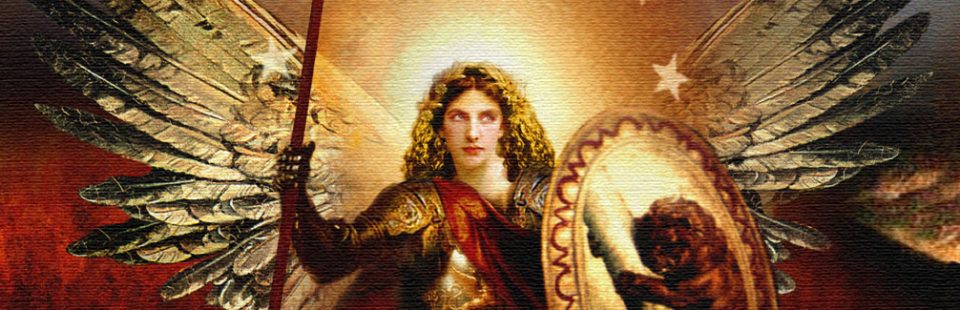



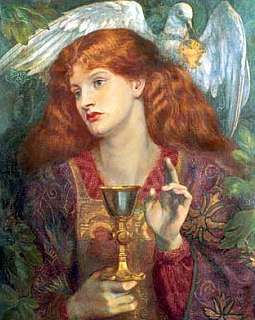
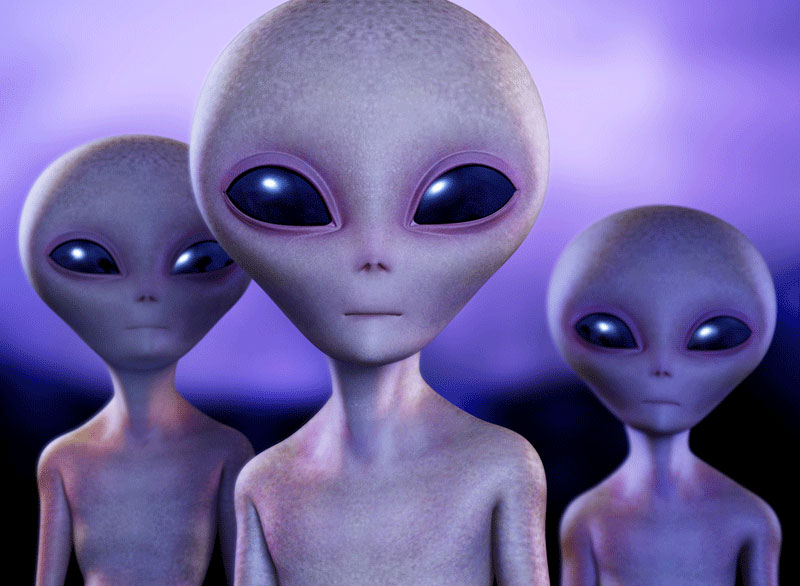

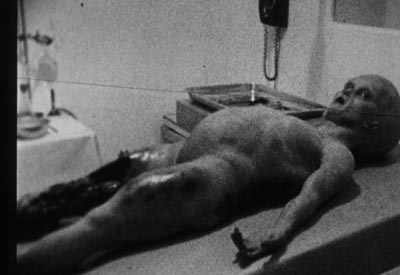


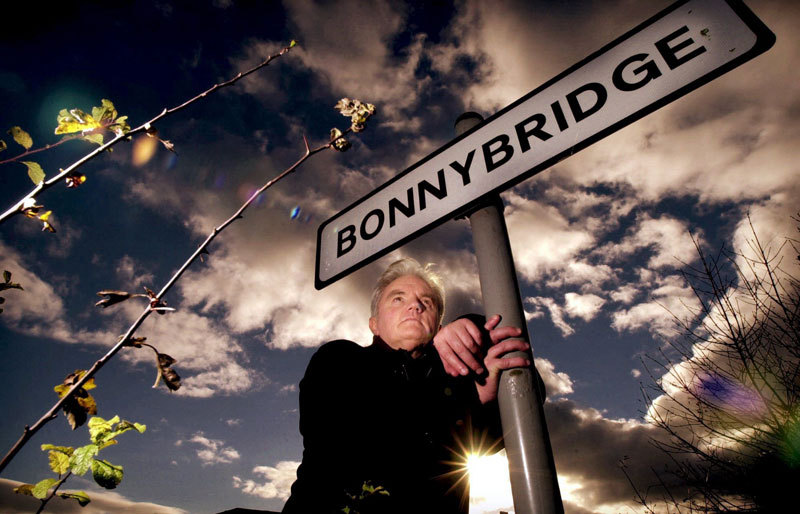



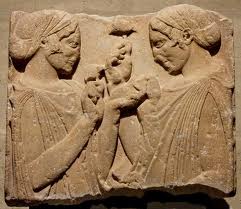





 Alyson Dunlop's Blog
You must be logged in to post a comment.